 EN
EN  PT
PT  ES
ES Stattus4 wins the Zayed Sustainability Award in the Water category.
Stattus4 won, this Tuesday (13) the Zayed Sustainability Prize 2026, in the Water category, one of the most relevant international recognitions for solutions that promote environmental, social and economic impact on a global scale.
The award received 7,761 entries from 173 countries. Of these, only 33 initiatives reached the final stage, with only 3 selected in the Water category.
Stattus4 was one of them, and became the second Brazilian company in the entire history of the award to achieve this result.

“It is an honor to be one of the winners of the Zayed Sustainability Award. Being alongside companies with such fantastic projects reinforces that what we are doing at Stattus4 is truly innovative, relevant, and makes a difference. It is an endorsement of all the effort of our team. We are very happy with the award and energized to go further, increase our impact, reach more customers, and benefit even more people to get ever closer to our purpose of saving the world's water.”.
Marilia Lara, CEO and Co-Founder
Zayed Sustainability Prize: Impact and Transformation
Created in honor of Sheikh Zayed bin Sultan Al Nahyan, founder of the United Arab Emirates, the Zayed Sustainability Prize recognizes organizations that offer innovative, scalable and measurable solutions for global challenges in the areas of water, energy, health, food, climate action and education.
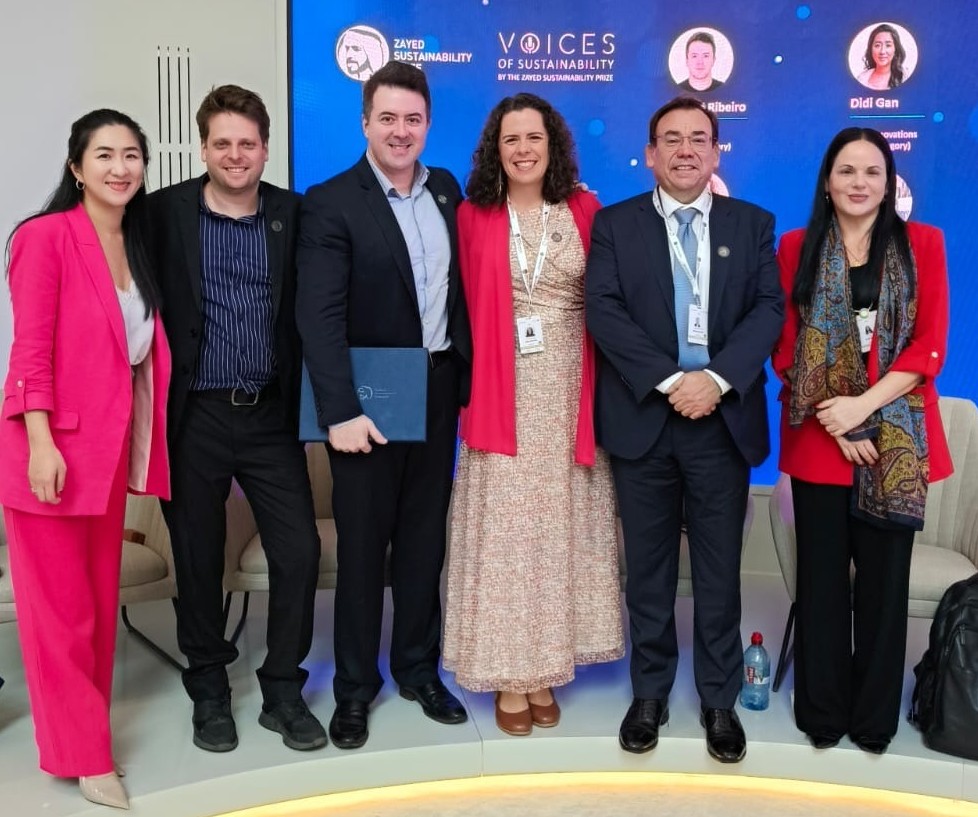
This year, the winners in the other categories are from the United Arab Emirates, Singapore, Switzerland, and Nepal. Among the six award-winning schools are institutions from Canada, Uganda, Jordan, Turkey, the Maldives, and Thailand.
About Stattus4
Founded in 2015, Stattus4 develops solutions based on artificial intelligence and data analysis to support water utilities in identifying hidden leaks, prioritizing critical areas, and reducing water losses.
Throughout its history, the company has worked in more than 250 cities, contributing to a reduction of approximately 540 million liters of water per day, a volume equivalent to 250 Olympic-sized swimming pools daily, enough to supply about 8 million people.